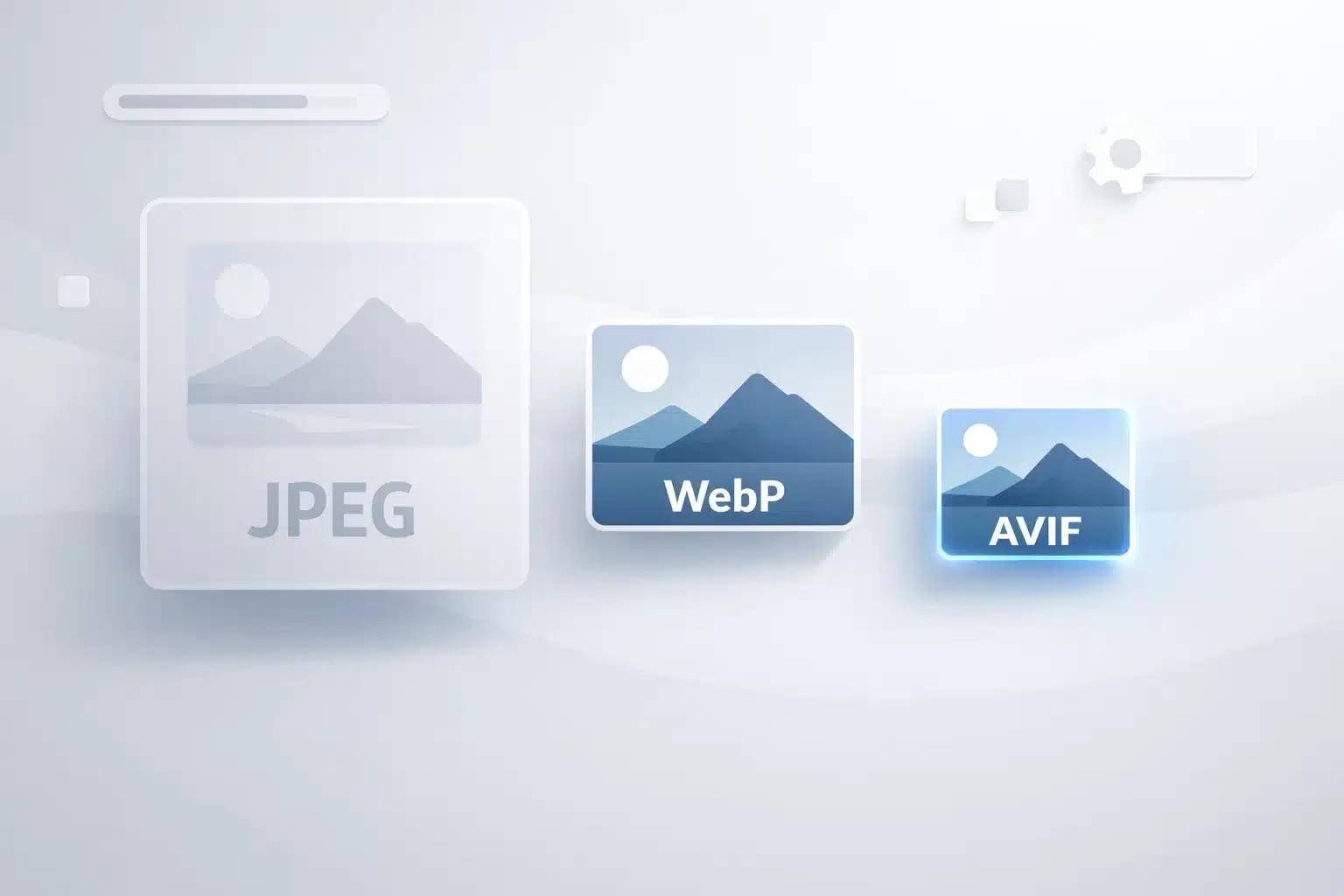
Images play a huge role in how a website looks — but they play an even bigger role in how fast it loads. Today, choosing the right image format is essential for SEO, page speed, mobile performance, and user experience.
Modern websites are moving away from traditional formats like JPEG and PNG and adopting WebP and AVIF, the two best image formats for the web today.
Let’s explain why.
Table of Contents
Why Image Optimization Is Critical for SEO
Search engines care deeply about performance. Large, unoptimized images are one of the most common reasons websites fail performance audits.
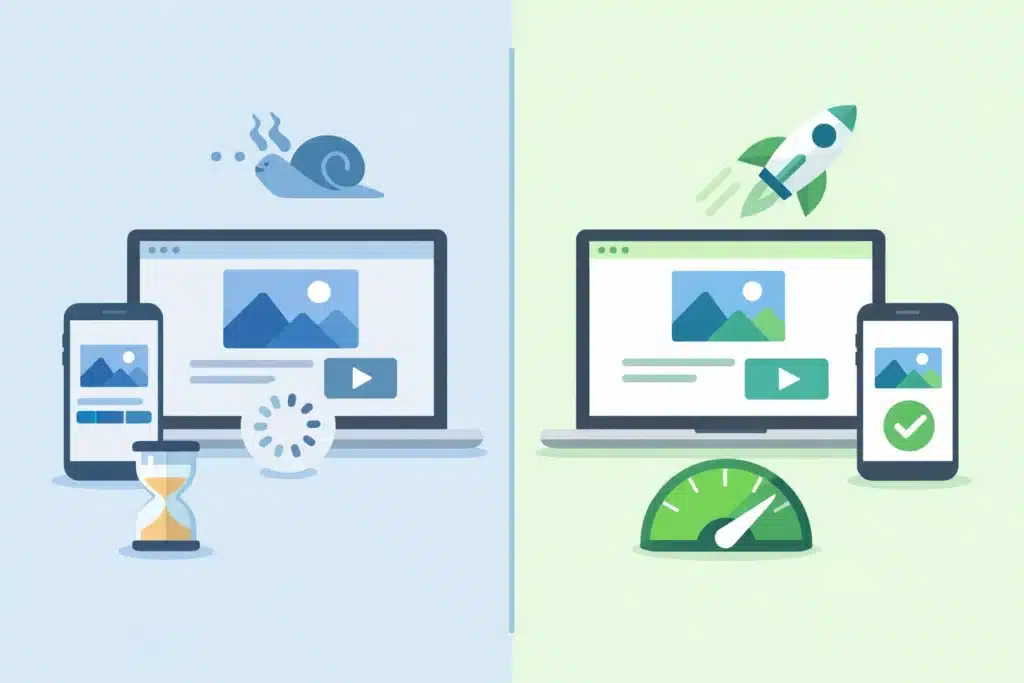
Poor image optimization leads to:
- Slower page load times
- Worse Core Web Vitals (especially LCP)
- Higher bounce rates
- Lower Google rankings
If you want better SEO, image optimization is not optional anymore.
Traditional Image Formats Are Holding Websites Back
For many years, websites relied on formats like:
- JPEG for photos
- PNG for transparent images
- GIF for animations
These formats still work, but they are not designed for modern performance needs. Compared to newer formats, they produce much larger files with no quality benefit.
In 2026, using only JPEG or PNG means:
- Wasted bandwidth
- Slower mobile performance
- Lower SEO potential
WebP: The Best Image Format for Most Websites
WebP is a modern image format developed to replace JPEG and PNG.
Why WebP Is Better
- Up to 35% smaller file size than JPEG
- Supports transparency like PNG
- Supports animation
- Excellent image quality
- Supported by all major browsers
For most websites, WebP is the safest and most effective upgrade you can make today.
Using WebP images alone can significantly improve:
- PageSpeed Insights score
- Mobile loading speed
- SEO performance
AVIF: The Most Advanced Image Format Available
AVIF is currently the most efficient image format available for the web.
It is based on modern video compression technology and delivers exceptional results.
Why AVIF Is the Future
- Up to 50% smaller than JPEG
- Smaller than WebP in many cases
- Better color accuracy and detail
- Ideal for high-resolution images
- Perfect for mobile-first websites
AVIF offers the best image quality at the lowest file size, which is exactly what search engines and users want.
WebP vs AVIF: Best Practice for SEO
The best solution is not choosing one — but using both.
Recommended strategy:
- Serve AVIF first
- Use WebP as a fallback
- Keep JPEG/PNG only for legacy cases
This ensures:
- Maximum compression
- Best SEO results
- Full browser compatibility
Real SEO and Performance Benefits
Websites that switch to WebP and AVIF usually see:
- Faster Largest Contentful Paint (LCP)
- Improved Core Web Vitals
- Better Google rankings
- Lower hosting and CDN costs
- Better user retention
Image format optimization is one of the highest ROI SEO improvements you can make.
OptimizeYourImage: Free, Private Image Conversion in Your Browser
OptimizeYourImage is a free online tool that lets you convert images to WebP and AVIF directly in your browser.
What Makes OptimizeYourImage Different
- Uses Canvas API for image processing
- No server uploads — images never leave your device
- Full privacy guaranteed
- Works instantly in the browser
- No registration required
Because everything happens locally, your images remain 100% private. This makes OptimizeYourImage ideal for sensitive files, client work, and professional use.
You get modern image formats, smaller file sizes, and better SEO — without sacrificing privacy.
Final Thoughts: The Best Image Format for SEO in 2026
The web is faster, more mobile, and more competitive than ever. Old image formats were not built for today’s performance requirements.
- JPEG and PNG are outdated for most use cases
- WebP is the modern standard
- AVIF is the future of image compression
If you want better SEO, faster loading pages, and a better user experience, switching to WebP and AVIF is one of the simplest and most effective steps you can take.
And with OptimizeYourImage, you can do it for free, directly in your browser, with full privacy.